Often in the IT world, the terms software developer and software engineer are used synonymously. And often, when a programmer is hired, he or she is interviewed for “one of” or two roles at once.
But the confusion is unavoidable: what is the correct name, what do each of them do, what are they responsible for, who writes code, and how to distinguish between these two professions and the two concepts: development and software engineering in general?
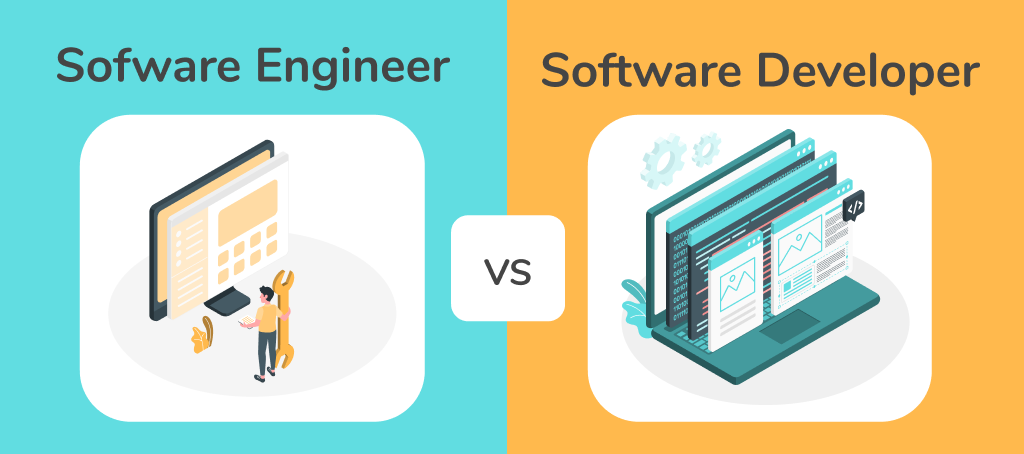
software Engineer vs Software Developer
Often, the position is far from reality, and the specifics of the work may be completely different. But there is a big difference between the roles of an engineer and a developer.
Software Developer
A developer is creative and solves problems using familiar methods and patterns that he finds during his development process. These methods can be courses, books, forums, conferences, and so on. But the difference between a developer and an engineer is not only in the approach to education. There is also a difference in tasks, their evaluation, approaches, and roles in the team.
Software Engineer
It is hard not to see the role of the engineer in the development cycle. And in the past, the roles of the developer and engineer only overlapped. The lines began to blur with the popularization of IT and the desire to simplify: the development of frameworks, preprocessors, lots of libraries, creation of languages such as Ruby, etc. Since then the lines have blurred, and it has become difficult to distinguish between an engineer and a coder.
But an engineer is essentially a person who has been trained professionally in programming, computer systems, etc., in college and university. He can apply scientific methods and solve problems by precise engineering methods.
Get a basic idea of the candidate’s skills, experience, and area of expertise through technical questions. But to distinguish an engineer, you should resort to technical problems and out-of-the-box questions.
An engineer’s creativity can be traced through a test – a technical problem. For example, a person needs to write a function/method that takes data as input and produces an unambiguous result. All the skills and engineering thinking will be seen in the very principles of his code logic, his patterns, and his approach.
After all, there can only be one solution – and if it works, so does the program. But the development process itself, what’s ‘under the bonnet’ can show us the thinking and approach to development.
The same task will help find an engineer. Only an engineer can apply engineering and scientific methods to solve critically complex problems at a high level. Not just solve one small problem, but solve all problems with a comprehensive approach.
Conclusion
Nowadays, despite the simplification of both development processes and approaches, many companies, as well as developers themselves, don’t draw any dividing lines between the concepts of software development and software engineering providers. In the IT sphere, people often think in terms of junior, middle, and senior.
Often, the roles of a senior and an engineer are comparable.
It is more a question of professionalism, development, and broadmindedness than a standard job classification.
What comes to mind when you hear the word “robot”? Do you picture a metallic humanoid in a spaceship in the distant future? Perhaps you imagine a dystopian future where humanity is enslaved by its robot overlords. Or maybe you think of an automobile assembly line with robot-like machines putting cars together.
Whatever you think, one thing is sure: robots are here to stay. Fortunately, it seems likely that robots will be more about doing repetitive or dangerous tasks than seizing supreme executive power. Let’s look at robotics, defining and classifying the term, figuring out the role of Artificial Intelligence in the field, The Future of Robotics, and how robotics will change our lives.
The Early History of robotics
The term robotics is an extension of the word robot. One of its first uses came from Czech writer Karel Čapek, who used the word in his play, Rossum’s Universal Robots, in 1920.
However, it is science fiction author Isaac Asimov who has been given credit for being the first person to use the term in the 1940s by Oxford English Dictionary.
In Asimov’s story, he suggested three principles to guide the behavior of autonomous robots and smart machines.
Asimov’s Three Laws of Robotics have survived to the present:
Robots must never harm human beings.
Robots must follow instructions from humans without violating rule 1.
Robots must protect themselves without violating other rules.
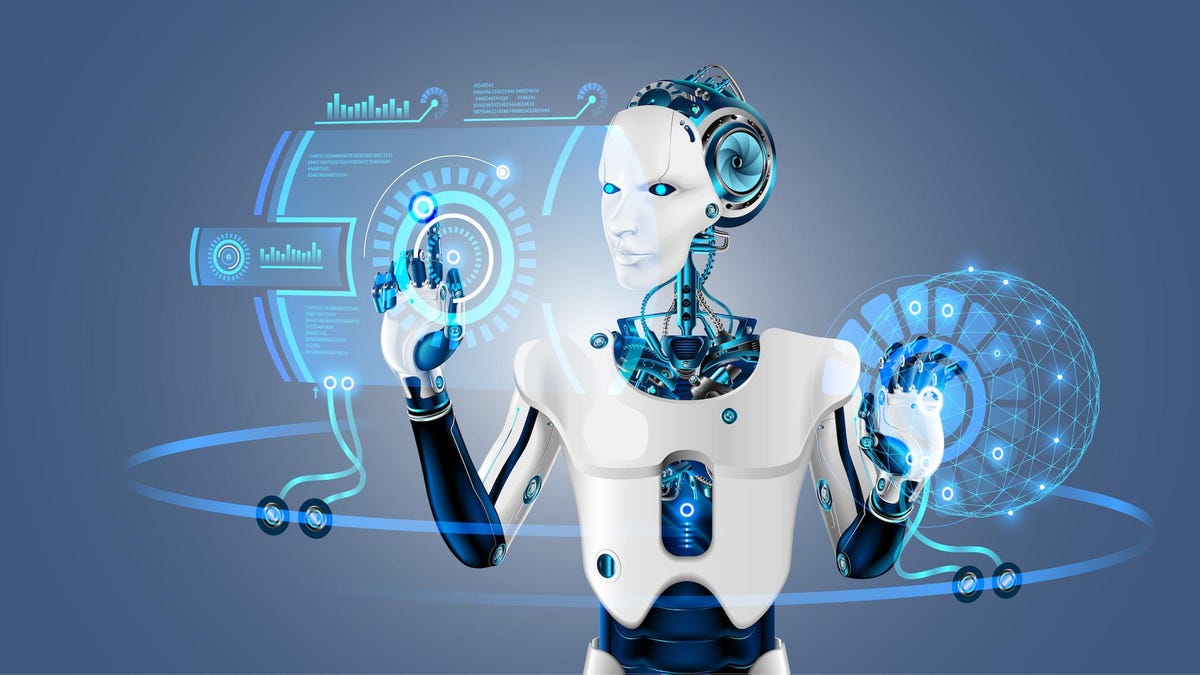
3d rendering robot working with digital display
Types of Robotics
Mechanical bots come in all shapes and sizes to efficiently carry out the task for which they are designed. All robots vary in design, functionality and degree of autonomy. From the 0.2 millimeter-long “RoboBee” to the 200 meter-long robotic shipping vessel “Vindskip,” robots are emerging to carry out tasks that humans simply can’t.
There are five distinct types of robots that perform tasks depending on their capabilities. Below is an outline of these types and what they do.
Pre-Programmed Robots
Pre-programmed robots operate in a controlled environment where they do simple, monotonous tasks. An example of a pre-programmed robot would be a mechanical arm on an automotive assembly line. The arm serves one function — to weld a door on, to insert a certain part into the engine, etc. — and its job is to perform that task longer, faster and more efficiently than a human.
Humanoid Robots
Humanoid robots are robots that look like or mimic human behavior. These robots usually perform human-like activities (like running, jumping and carrying objects), and are sometimes designed to look like us, even having human faces and expressions. Two of the most prominent examples of humanoid robots are Hanson Robotics’ Sophia and Boston Dynamics’ Atlas.
Autonomous Robots
Autonomous robots operate independently of human operators. These robots are usually designed to carry out tasks in open environments that do not require human supervision. They are quite unique because they use sensors to perceive the world around them, and then employ decision-making structures (usually a computer) to take the optimal next step based on their data and mission. One example of an autonomous robot is the Roomba vacuum cleaner, which uses sensors to roam freely throughout a home.
Teleoperated Robots
Teleoperated robots are semi-autonomous bots that use a wireless network to enable human control from a safe distance. These robots usually work in extreme geographical conditions, weather and circumstances. Examples of teleoperated robots are the human-controlled submarines used to fix underwater pipe leaks during the BP oil spill or drones used to detect landmines on a battlefield.
Augmenting Robots
Augmenting robots, also known as VR robots, either enhance current human capabilities or replace the capabilities a human may have lost. The field of robotics for human augmentation is a field where science fiction could become reality very soon, with bots that have the ability to redefine the definition of humanity by making humans faster and stronger. Some examples of current augmenting robots are robotic prosthetic limbs or exoskeletons used to lift hefty weights.
Like any innovation today, robots have their Advantages and Disadvantages. Here’s a breakdown of the good and bad about robots and the future of robotics.
Advantages of Robots
They work in hazardous environments: Why risk human lives when you can send a robot in to do the job? Consider how preferable it is to have a robot fighting a fire or working on a nuclear reactor core.
They’re cost-effective: Robots don’t take sick days or coffee breaks, nor need perks like life insurance, paid time off, or healthcare offerings like dental and vision.
They increase productivity: Robots are wired to perform repetitive tasks ad infinitum; the human brain is not. Industries use robots to accomplish the tedious, redundant work, freeing employees to tackle more challenging tasks and even learn new skills.
They offer better quality assurance: Vigilance decrement is a lapse in concentration that hits workers who repeatedly perform the same functions. As the human’s concentration level drops, the likelihood of errors, poor results, or even accidents increases. Robots perform repetitive tasks flawlessly without having their performance slip due to boredom.
Disadvantages of Robots
They incur deep startup costs: Robot implementation is an investment risk, and it costs a lot. Although most manufacturers eventually see a recoup of their investment over the long run, it’s expensive in the short term. However, this is a common obstacle in new technological implementation, like setting up a wireless network or performing cloud migration.
They might take away jobs: Yes, some people have been replaced by robots in certain situations, like assembly lines, for instance. Whenever the business sector incorporates game-changing technology, some jobs become casualties. However, this disadvantage might be overstated because robot implementation typically creates a greater demand for people to support the technology, which brings up the final disadvantage.
They require companies to hire skilled support staff: This drawback is good news for potential employees, but bad news for thrifty-minded companies. Robots require programmers, operators, and repair personnel. While job seekers may rejoice, the prospect of having to recruit professionals (and pay professional-level salaries!) may serve as an impediment to implementing robots.
The Future of Robotics and Robots
Thanks to improved sensor technology and more remarkable advances in Machine Learning and Artificial Intelligence, robots will keep moving from mere rote machines to collaborators with cognitive functions. These advances, and other associated fields, are enjoying an upwards trajectory, and robotics will significantly benefit from these strides.
We can expect to see more significant numbers of increasingly sophisticated robots incorporated into more areas of life, working with humans. Contrary to dystopian-minded prophets of doom, these improved robots will not replace workers. Industries rise and fall, and some become obsolete in the face of new technologies, bringing new opportunities for employment and education.
That’s the case with robots. Perhaps there will be fewer human workers welding automobile frames, but there will be a greater need for skilled technicians to program, maintain, and repair the machines. In many cases, this means that employees could receive valuable in-house training and upskilling, giving them a set of skills that could apply to robot programming and maintenance and other fields and industries.
As the digital landscape continues to evolve, so does the concept of ownership. Non-Fungible Tokens (NFTs) have emerged as a revolutionary form of digital assets, and OpenSea has positioned itself as a leading marketplace for buying, selling, and trading NFTs. In this comprehensive guide, we will delve into the workings of OpenSea, exploring its features, functionality, and the underlying technology that drives this vibrant ecosystem.
Understanding OpenSea: An Introduction to NFTs and the Marketplace
What are NFTs?
NFTs are unique digital assets that utilize blockchain technology to establish verifiable ownership. Unlike cryptocurrencies, each NFT possesses distinct characteristics and cannot be exchanged on a one-to-one basis.
OpenSea: An Overview
OpenSea is the largest decentralized marketplace for NFTs, providing a platform for creators, collectors, and traders to engage in the buying and selling of digital collectibles.
How OpenSea Works: A Step-by-Step Guide
Creating an OpenSea Account
To begin your NFT journey on OpenSea, you need to create an account by connecting your cryptocurrency wallet. This wallet will serve as your digital identity and store your NFT assets.
Navigating OpenSea’s Interface
OpenSea offers a user-friendly interface that allows you to explore various NFT categories, search for specific items, and interact with creators and collectors.
Buying NFTs on OpenSea
Once you find an NFT that catches your interest, you can place a bid or purchase it directly using cryptocurrency. OpenSea supports a range of popular cryptocurrencies, including Ethereum and others compatible with the Ethereum blockchain.
Selling NFTs on OpenSea
As a creator or collector, you can list your NFTs for sale on OpenSea. Specify the price, choose whether it is an auction or a fixed sale, and set any additional terms or conditions.
OpenSea facilitates secondary sales and auctions, enabling users to trade NFTs directly with other participants. The marketplace offers various auction formats, including English auctions, Dutch auctions, and even interactive experiences.
Wallet Integration and Security
OpenSea integrates with different cryptocurrency wallets, allowing users to securely manage their digital assets. By connecting your wallet, you retain complete control over your NFTs and can seamlessly execute transactions.
OpenSea provides curated collections and trending categories, allowing users to explore a vast array of NFTs based on their interests. The platform also offers personalized recommendations based on your browsing and purchasing history.
Royalties and Smart Contracts
OpenSea supports the use of smart contracts, which allow creators to receive royalties whenever their NFTs are resold. This feature ensures ongoing compensation for artists and incentivizes the creation of unique digital works.
Community and Social Interactions
OpenSea fosters an active community of creators, collectors, and enthusiasts. Users can engage in discussions, follow their favorite artists, and build connections within the NFT ecosystem.
Rarity and Scarcity
One of the defining aspects of NFTs is their rarity. OpenSea allows creators to issue limited editions of their digital assets, enhancing their desirability and collectability.
Challenges and Future Developments
Environmental Impact and Sustainability
The energy consumption associated with blockchain technologies, including NFTs, has raised concerns regarding sustainability. OpenSea and other platforms are actively exploring solutions to reduce their carbon footprint.
Scalability and User Experience
As NFT popularity continues to surge, scalability and user experience become crucial considerations. OpenSea is investing in technological advancements to improve performance, enhance user interfaces, and ensure a seamless experience for all participants.
OpenSea has revolutionized the world of digital collectibles by providing a platform that enables creators, collectors, and traders to engage with NFTs seamlessly. By understanding the workings of OpenSea, you can navigate the marketplace confidently and explore the limitless possibilities offered by this innovative technology. Embrace the world of NFTs, and immerse yourself in the digital art revolution facilitated by OpenSea.
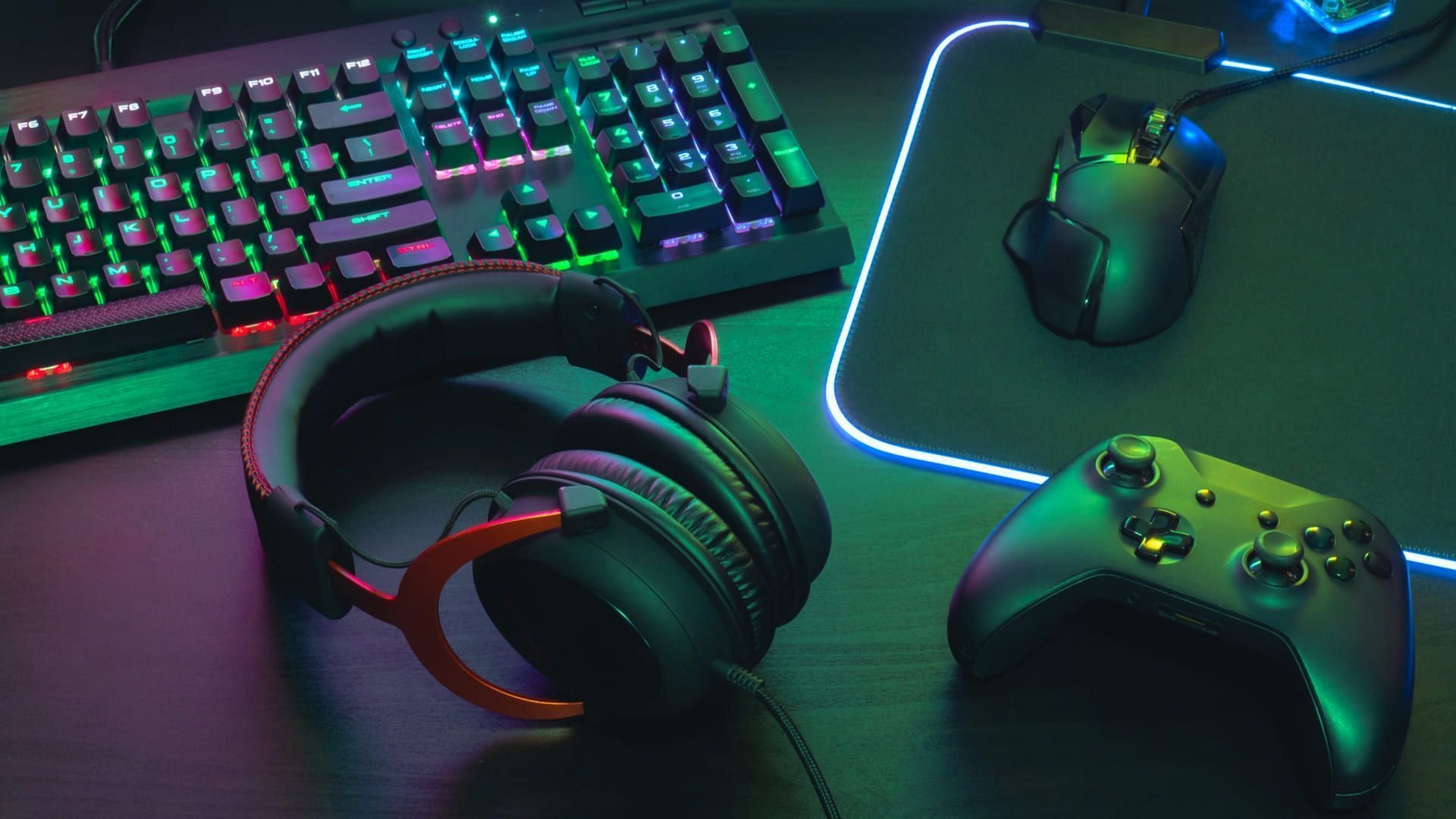
For all hardcore gamers and newcomers, you will need gaming accessories at any cost to enhance your gaming experience. Gaming keyboards, gaming mouse pads, gamepads, consoles, joysticks, grippers, mobile cooling fans, etc. are some of the accessories that every gamer wishes to have in his/her gaming closet.
You can enhance your gameplay experience by getting yourself some cool gaming accessories. Some popular games like PUBG or Free Fire require a gaming controller or trigger to smooth the gameplay style.
There are many more gaming accessories available and you must have a fair idea to choose which one is good for you.
The easiest and the most trusted way to acquire these accessories is to buy them from known online stores.
Factors to Consider while Buying Gaming Accessories:
Compatibility: You should make sure that your purchased accessories are compatible with the platform on which you play. The Platform could be anything like a PC, gaming console, or mobile.
Quality and Durability: Like any physical product durability is a must-have factor to be considered. You should always select durable accessories. The quality should be good and made with high-grade materials so that they can withstand intense gaming sessions without suffering even a tiny bit.
Comfort: How can any gamer forget about the comfort part? So when selecting gaming accessories, prioritize comfort over everything else.
Customization Features: You will find many gaming accessories offering customizable features like programmable buttons or RGB lighting. They just add a personal touch when personalizing your gaming setup.
Reviews and Recommendations: At the end, you should check out reviews and if possible take recommendations from fellow gamers in your community.
Understanding Compatibility with Different Gaming Platforms:
PC Gamers: For optimal PC performance, ensure the gaming accessories you select are compatible with its operating system and offer easy and quick integration.
Console Gamers: For gamers who are looking for gaming accessories like PlayStation, Xbox and Nintendo, you should choose those that are specially designed for each gaming console to provide smooth gameplay.
Mobile Gamers: After the advent of high-quality games for mobile devices, most Indian players now prefer to play games on mobiles. So for optimal performance on mobile gaming devices, look for accessories that are compatible with your phone such as a gamepad or controller.
And remember one thing, always try to strike a balance between quality and affordability while searching for the best gaming accessories. So shop around and compare prices for the best possible price point with high-quality products.
Along with all the above points, you should also consider your personal preference while selecting gaming accessories.
I am saying this because every gamer has specific needs and demands in their mind. It depends on how you game, what gaming setup you need, how much time you want to spend gaming, etc.
So choose accessories that complement your own gaming style and comfort to maximize enjoyment on every gaming trip. Gaming shouldn’t just be about winning but enjoying every step of the way.
Gaming is more than simply a hobby; it is a long journey of excitement that puts our talents to the test while also strengthening community bonds. And when it comes to upgrading our gaming setup, we always choose to shop online. However, online shopping exposes you to a plethora of sources that not only sell duplicate things but are also scammers. So, when shopping for gaming equipment online, you should be cautious and keep a few things in mind.
So, here are some Online Shopping Tips we look for when Buying Gaming Accessories online.
Online Shopping Tips for Gamers
Read the following reviews: –
Take time to go through user reviews before adding your favorite gaming headset or mouse to your cart. These nuggets of knowledge from different gamers offer insightful information about functionality, comfort, and durability. You will also get to know about the good and bad parts of that particular product.
Discover Hidden Treasures:
While popular online stores may appear to be the obvious choice, don’t overlook the importance of uncovering hidden treasures. You should also go for specialized gaming accessory websites, independent sellers, and unknown markets. And, in general, these sites provide one-of-a-kind, high-quality items that you won’t find on other popular markets.
Price Comparison:
As a player, you should always act smartly, just like you do in the game. So, before you decide to buy something right away, keep an eye on your virtual money. Don’t buy accessories from the first online store you come across. Instead, take the time to compare rates across numerous channels. Frequently, the same accessories have varied costs across platforms. This comparison process may ask for your patience but it may save a huge chunk of money of yours.
Keep an eye out for sales and discounts:
Who doesn’t like a good deal? You should keep an eye out for seasonal discounts, flash sales, and special promotions offered by various online gaming companies. You can also get exclusive gaming gear at reduced costs during special events like Black Friday, Cyber Monday, or gaming expos. To learn about such events, sign up for newsletters from your favorite retailers online or follow them on social media.
Warranty and Return Policies:
Nobody wants to receive an incompatible gaming peripheral or feel like they wasted their money. If you purchased a product that was discovered to be defective after some time of use, you should be able to fix or replace it while it is still under warranty. So, before making a purchase, make sure to read the warranty and return policies. Look for stores that provide hassle-free returns and lengthy warranty terms so that you can use the device with confidence knowing that it is covered by a long warranty period.
Are You Taking Advantage of Bundles?
Many online stores offer discounted bundle packages that contain multiple accessories at once, whether it’s a headset and keyboard combo or a controller and charging dock set, these bundles can help you save money while expanding your gaming arsenal.
Connect with Other Gamers:
The gaming community is a vast domain filled with enthusiastic individuals willing to share their experiences and thoughts. Join online gaming communities, connect with other players, and receive their recommendations on where to buy gaming equipment. In this helpful gaming network, you will not only acquire useful insight but also make new friends.
Essential Gaming Accessories Every Gamer Needs
Gaming Headphones: You should buy headphones that have crystal-clear audio quality with a good mic to communicate efficiently with your teammates.
Gaming Keyboard and Mouse: Go for a responsive yet ergonomic gaming mouse with the necessary mouse keys to enhance precision and control during games.
Gaming Controller: Console gamers need a durable, comfortable gaming controller in order to enjoy long gaming sessions comfortably.
Gaming Chair: All hardcore gamers need to sit for long hours, so you must buy a gaming chair that gives support and comfort to your back and neck during extended gameplay sessions without any discomfort.
In the ever-evolving world of technology, programming languages play a crucial role in shaping the landscape of software development. With each passing year, new languages emerge, while existing ones undergo transformations to meet the demands of a rapidly changing industry.
In this blog post, we will embark on an exciting journey to explore some of the future’s top programming languages. These languages are predicted to make significant waves in the software development community, enabling developers to build cutting-edge applications and stay ahead in the digital era.
Rust has been gaining considerable momentum in recent years, thanks to its focus on memory safety, performance, and concurrency. Designed to overcome the challenges of writing safe and efficient system-level code, Rust empowers developers to build robust and reliable applications. Its unique features, such as zero-cost abstractions and ownership model, provide memory safety without sacrificing performance. Rust’s growing popularity in domains like systems programming, embedded devices, and web development showcases its potential as a top programming language of the future.
Kotlin, originally introduced as a language for Android app development, has witnessed significant adoption and is poised for an even brighter future. Praised for its modern syntax, strong type inference, and seamless interoperability with Java, Kotlin offers an enhanced development experience. With Google officially endorsing Kotlin as a first-class language for Android development, its popularity is set to soar. Beyond mobile development, Kotlin’s versatility extends to server-side programming, web development, and even native application development, making it a formidable contender among future programming languages.
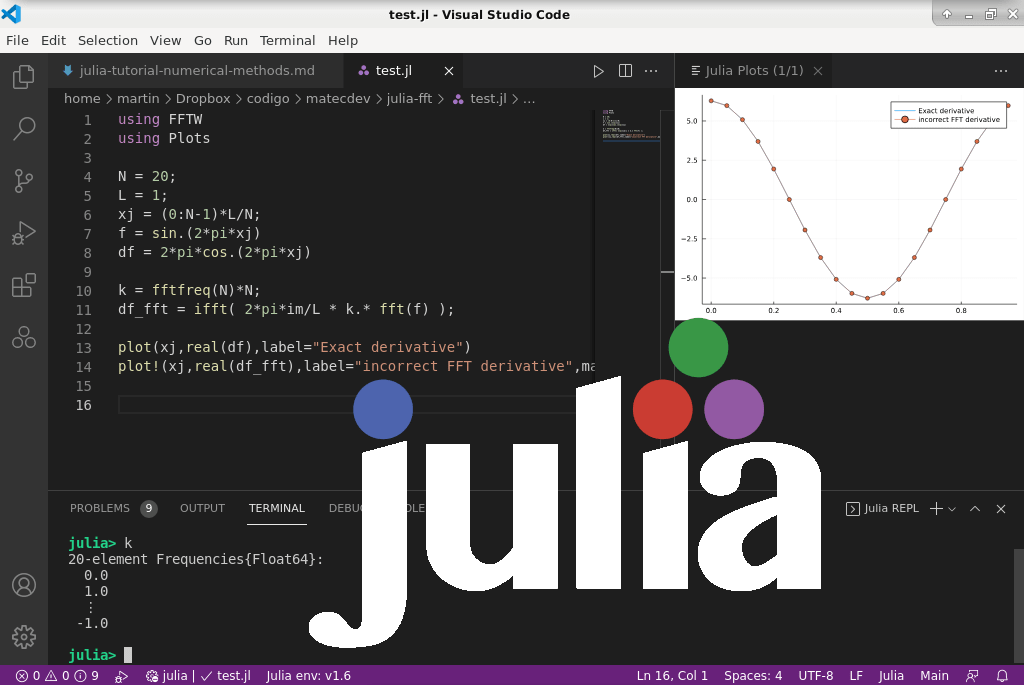
Julia is a high-level, high-performance language that combines the best of both worlds: the ease of use of dynamic languages and the performance of statically typed languages. Built with scientific computing in mind, Julia has gained attention from researchers, data scientists, and engineers due to its ability to efficiently handle numerical and computational tasks. Its extensive ecosystem of packages and libraries, along with its simplicity and speed, make it a promising language for domains such as data analysis, machine learning, and numerical simulations.
TypeScript has emerged as a go-to language for web development, and its growth shows no signs of slowing down. Developed by Microsoft, TypeScript is a superset of JavaScript that introduces static typing and provides tooling for large-scale applications.
By adding type annotations, developers can catch errors during compilation, leading to more reliable code. TypeScript’s adoption by major frameworks such as Angular and React, along with its robust community support, positions it as a top contender among future programming languages, particularly in the realm of web development.
Elixir, built on top of the Erlang Virtual Machine (BEAM), is gaining traction in the world of concurrent and distributed systems. Known for its fault-tolerant nature and scalability, Elixir combines a familiar syntax inspired by Ruby with the powerful actor model provided by Erlang. Its ability to handle millions of connections concurrently and handle real-time communication makes it ideal for building robust and highly available applications, such as chat systems, IoT platforms, and collaborative tools.
Conclusion: As technology continues to evolve, programming languages play a vital role in driving innovation and enabling developers to bring their ideas to life. The future’s top programming languages, such as Rust, Kotlin, Julia, TypeScript, and Elixir, offer unique features and cater to specific domains, ensuring that developers have the necessary tools to tackle complex challenges. By staying informed and embracing these languages, programmers can remain at the forefront of the ever-changing software development landscape, embracing new opportunities and creating impactful solutions.